/rootcamp_logo_white_2022.png?width=2123&height=630&name=rootcamp_logo_white_2022.png)

/RC%20logo%202022.png?width=2325&height=703&name=RC%20logo%202022.png)
Against the backdrop of geopolitical tensions, volatile energy markets and Germany’s continued heavy dependence on fossil fuel imports, the search for resilient and climate-friendly alternatives is becoming increasingly urgent. A new study conducted as part of the “Bioeconomy Deep Dives” by the innovation hub RootCamp on behalf of Rentenbank and the Federal Ministry of Agriculture, Food and Regional Identity (BMLEH) shows that domestically produced Bio-LNG could play a previously underestimated role by combining security of supply, climate action and regional value creation.
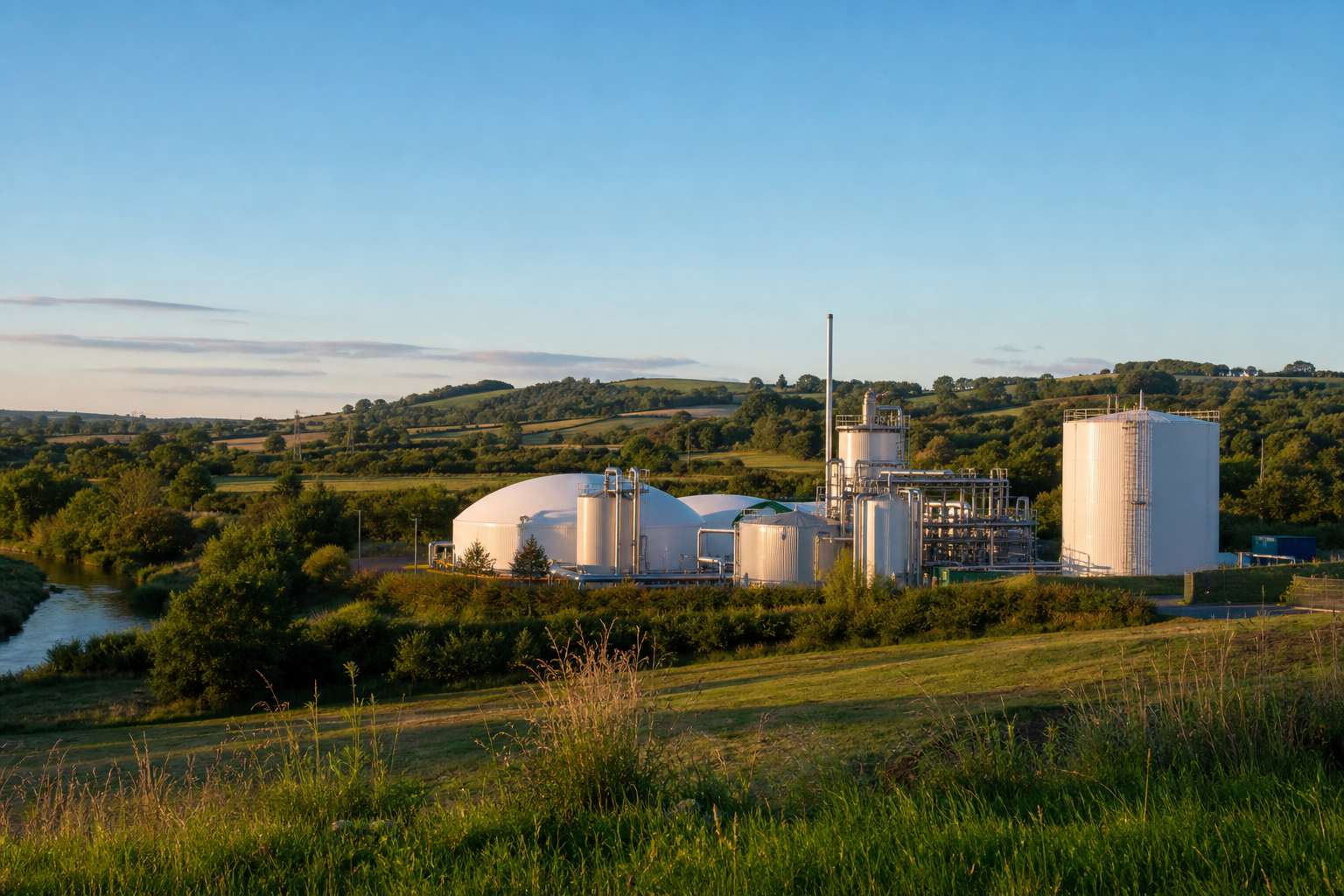
Bio-LNG is produced from biomethane and can be manufactured in particular from agricultural residues such as slurry, manure and organic waste. The analysis of the entire value chain identifies significant potential, particularly in heavy-duty transport and shipping, to partially replace fossil fuels, reduce emissions in the transport sector and decrease dependence on imported fossil fuels.
“The past few years have clearly demonstrated how vulnerable energy-dependent economies can be. Domestically produced Bio-LNG can help make our energy supply more independent and therefore more resilient to geopolitical conflicts, strengthen value creation in rural areas and support the transition towards a more climate-friendly transport sector,” says Nikola Steinbock. “In heavy-duty transport in particular, we need technology-neutral solutions that are available in the short term and can make a realistic contribution to reducing emissions.”
The study concludes that Bio-LNG has particular potential in areas where battery-electric solutions currently still face technical or infrastructure-related limitations. At the same time, the authors identify considerable barriers to scaling up the market in Germany. These include regulatory uncertainty, lengthy approval procedures, competitive disadvantages compared with subsidised imports and a lack of investment certainty.
The study also emphasises that sustainable growth can only be achieved by consistently prioritising residual materials and by-products and adhering to high sustainability standards. Preventing methane slip throughout the entire value chain and establishing transparent certification and monitoring systems are also highlighted as essential requirements for ensuring a credible climate impact and public acceptance of the technology.
Hans-Henning Schuur, Managing Director of RootCamp, emphasises: “Bio-LNG produced from organic residual materials such as agricultural manure or household waste offers considerable potential for the transition towards a bioeconomy. To ensure that these opportunities can be utilised both economically and sustainably, existing innovation gaps must be closed and barriers to scaling must be overcome. Through our collaborative deep-dive format, we worked with stakeholders from across the entire value chain to identify concrete measures for policymakers and industry.”
The authors therefore recommend, among other measures, reliable policy frameworks, competitive funding and cost structures for domestic producers, and stronger incentives for climate-friendly fuels in heavy-duty transport. They also see considerable potential in regional clusters that connect agriculture, energy production and logistics more closely, thereby creating additional synergies. The study was conducted as part of the “Bioeconomy Deep Dives” and is based on interviews and workshops involving more than 40 experts from agriculture, the energy sector, industry, logistics and research. The format aims to systematically identify innovation gaps and barriers to scaling in key bioeconomic value chains and to develop practical solutions together with the relevant stakeholders.
Through the “Bioeconomy Deep Dives”, RootCamp and Landwirtschaftliche Rentenbank analyse emerging technologies and value chains within the bioeconomy. Following previous editions focusing on industrial hemp and lignin, the third edition of the format examines Bio-LNG.
Read the full report “Bioeconomy Deep Dives – Bio-LNG here.